
As OEMs pursue more software-driven vehicle architectures, the underlying architecture is becoming increasingly important. The ability to connect, coordinate and manage vehicle functions efficiently is critical to supporting future software innovation.
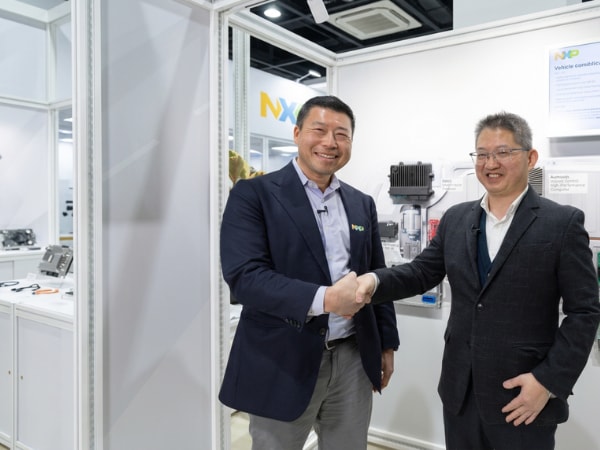
For Delta, this shift created an opportunity to reimagine how vehicle systems are connected and controlled. Working closely with NXP, Delta developed a zonal gateway platform that brings multiple vehicle functions together within a unified architecture, helping lay the groundwork for the next generation of vehicle platforms.
OEMs are looking for ways to consolidate functions such as gateway, body, audio, regional I/O and power management into fewer systems without sacrificing performance, deterministic communication or system resilience. At the same time, they need architectures that can scale across vehicle programs while supporting evolving software-defined vehicle requirements.
Delta recognized the need for a practical, production-oriented platform that could help OEMs evaluate and accelerate this transition. The company set out to develop a zonal gateway solution capable of consolidating multiple vehicle functions while meeting demanding requirements for performance, functional safety, cybersecurity and long-term scalability. Achieving these goals required an architecture that could support deterministic communication, mixed-criticality applications and future software-defined vehicle services on a common platform.

To address these challenges, Delta developed a zonal gateway solution built on NXP's S32E real-time processor platform. Designed for next-generation vehicle architectures, the platform consolidates multiple domain functions into zonal control units that serve as secure communication and control hubs throughout the vehicle.
What sets Delta's approach apart is its ability to bring together capabilities that are often implemented as separate systems. The platform combines deterministic networking, resilient communications, flexible audio deployment, local zonal execution and smart power management within a single architecture, helping OEMs simplify system integration while maintaining the performance and reliability required for modern vehicle platforms. This integrated approach enables OEMs to evaluate and deploy zonal architectures without sacrificing functionality or system resilience.
The solution manages power distribution, diagnostics and secure data routing across vehicle zones while supporting multiple in-vehicle networks. Using Time-Sensitive Networking (TSN), it enables deterministic Ethernet communication between zones and provides the foundation for real-time vehicle operations. The architecture also supports applications such as Electric Vehicle Charging Controller (EVCC) functionality alongside other vehicle services on a single hardware platform.
Built-in functional safety up to ASIL D, ISO 21434 cybersecurity support and hypervisor-based virtualization allow applications with different safety requirements to operate independently while sharing the same computing platform. Support for Ethernet, CAN FD, LIN and FlexRay networking also enable OEMs to connect existing vehicle subsystems while transitioning toward new zonal architectures. Through NXP software integration and validation, Delta was also able to streamline development and help accelerate deployment of the platform.
Beyond the technology itself, Delta and NXP worked side by side throughout development. Through close co-engineering, validation support and access to NXP's software ecosystem, the teams accelerated development while supporting the platform's alignment with automotive safety and compliance requirements.
Multi-core compute, hardware-rooted security and resource isolation designed to support ASIL D mixed-criticality applications on a single chip.
Production-grade development environment and AUTOSAR®-compliant drivers that accelerate software development and safety validation.
The collaboration resulted in a production-ready zonal gateway platform that helps OEMs consolidate vehicle functions, simplify network architectures and accelerate development of next-generation vehicle platforms.
At the system level, hardware-based isolation that is within the S32 device allows applications with different safety requirements to run on the same chip, reducing the need for additional real-time applications while maintaining strict safety and cybersecurity standards.
Together, Delta and NXP have created a platform that lays the foundation for long-term software evolution. With deterministic networking and support for over-the-air updates, OEMs can continuously add features and services without reworking the underlying architecture.

Delta and NXP see opportunities to build on their zonal gateway collaboration as OEMs consider more comprehensive zonal architectures. While the initial platform focused on gateway consolidation, deterministic networking and secure communication across vehicle networks, future work could explore how these capabilities may support broader vehicle applications.
At the center of this effort is a CoreRide-powered zonal solution that combines CoreRide Z248-based zonal controllers with deterministic Audio over Ethernet, configurable 10BASE-T1S audio endpoints, resilient communications and integrated smart power management. By bringing these capabilities together on a single platform, Delta is helping simplify the evaluation and deployment of increasingly sophisticated zonal architectures.
The platform is also designed to support multi-zone Ethernet networking with built-in communication resiliency while enabling local execution of vehicle functions within each zone. This allows OEMs to explore how future architectures can distribute intelligence closer to where data is generated and acted upon, supporting new approaches to vehicle services, audio deployment, energy management and regional I/O control.
Together, Delta and NXP are advancing from a gateway-centric architecture toward a complete zonal solution platform, helping OEMs accelerate development, reduce integration complexity and prepare for the next generation of software-defined vehicle architectures.
Delta, founded in 1971 and listed on the Taiwan Stock Exchange (code: 2308), is a global leader in power and thermal management with a thriving portfolio of IoT-based smart energy-saving solutions in the fields of data center infrastructure, microgrids, smart manufacturing, intelligent buildings and E-mobility to nurture mankind's sustainable development. As a world-class corporate citizen guided by its corporate mission, "To provide innovative, clean and energy-efficient solutions for a better tomorrow," Delta leverages its core competence in high-efficiency power electronics and its ESG-embedded business model to address key environmental issues related to climate change. Delta serves customers through its sales offices, R&D centers and manufacturing facilities spread over close to 200 locations across 5 continents.
Throughout its history, Delta has received numerous awards and worldwide recognition for its business achievements, innovative technologies and dedication to ESG. Since 2011, Delta has been listed on the Dow Jones Best-in-Class World Index (formerly the DJSI World Index of Dow Jones Sustainability™ Indices) for 15 consecutive years. Delta has also won double A List ratings from CDP 5 times for its substantial contribution to climate change and water security issues, and has been named Supplier Engagement Leader over 9 consecutive years for its continuous development of a sustainable value chain.
Learn more about Delta
John Chang is Senior Manager in the Automotive Systems and Platforms (AS&P) organization at NXP Semiconductors, where he is responsible for the marketing and promotion of automotive system architectures and solutions. Prior to his current role, he served as a Product Manager and Global Marketing Manager at NXP, leading the multicore communications processor product line.
With more than 20 years of experience in the semiconductor industry, John has extensive expertise spanning automotive electronics, wireless and wired communications equipment, data center and enterprise networking infrastructure, as well as industrial networking applications.
Before joining NXP, John held positions at Freescale Semiconductor and Motorola Semiconductor, where he was responsible for processor platform technical support, system architecture design and product marketing activities. His broad experience across diverse market segments has enabled him to bridge technology innovation with real-world industry applications.