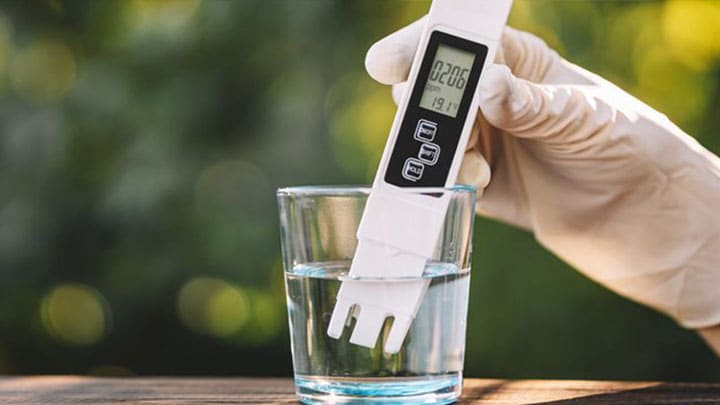
Water is essential to people, ecosystems – and semiconductor production. Each year, NXP manufacturing sites use around 12 billion liters of water. In 2022, we started an ambitious journey to recycle more water and reduce pressure on local supplies. Last year, we achieved our 2027 target to recycle 60% of the wastewater from our manufacturing – two years ahead of schedule.
The critical role of water in chipmaking
ICs underpin the modern world. They are at the heart of everything from smartphones and cars to medical devices and renewable energy systems. However, making ICs is a water-intensive industry. We use water to clean and polish wafers, wash away particles, remove dangerous pollutants from exhaust gases, and keep facilities and equipment cool, to name just a few.
NXP recognizes that water is a vital resource. We continually work to make semiconductor production more sustainable and reduce our environmental impact. Conserving and reusing water helps our business, the environment and the communities in which we operate.
Turning ambitious water goals into real results
It isn’t feasible to eliminate water from chipmaking. Instead, we focused on being smarter in how we use that water, recycling and reusing it where possible. In 2015, our manufacturing sites recycled about 40% of wastewater – for example, to supply cooling towers.
But we knew we needed to go much further. In 2022, we made water conservation a strategic priority, a commitment that would guide investment, innovation and process improvement over multiple years. In particular, we set a target to recycle 60% of wastewater by 2027.
We achieved that target in 2025. That’s two years ahead of schedule. In the last year alone, we have increased wastewater recycling by more than 5 percentage points.
This success is particularly notable as it was achieved through improvements at existing operational sites, often with limited space for additional water-processing equipment. Achieving our goal ahead of schedule demonstrates the ingenuity and innovation of our facilities teams.
More pure water, less freshwater
Each NXP manufacturing site has its own water-recycling challenges. So, while the sites all share information and insights, solutions must be chosen and optimized to suit the local situation.
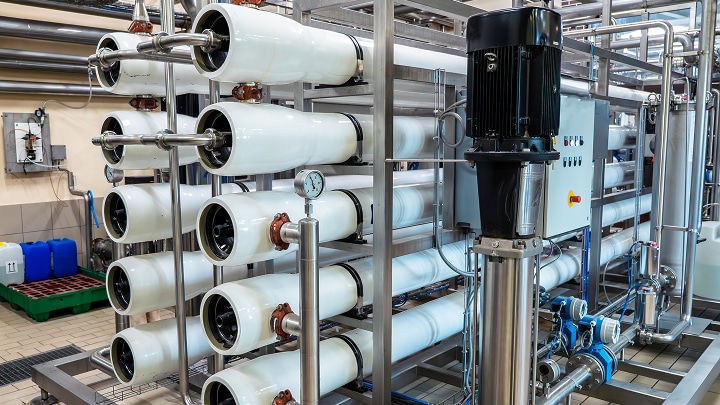
For example, wafer processing facilities clean wafers with ultrapure water (UPW). This is made onsite by further purifying local water supplies through a multi-step process that includes reverse osmosis. The impurities are concentrated in wastewater (brine) that is rejected, while the UPW passes on for use in the fab.
Our ATMC site in Austin, Texas has increased the efficiency of its UPW plant recovery from 89% to over 96%. To do that, the local team worked with a supplier to adapt a patented, new water treatment technology called closed-circuit reverse osmosis (CCRO). Under the new setup, water is recirculated through the reverse osmosis equipment multiple times, increasing the salt concentration in the brine. Moreover, the wastewater is discharged intermittently, rather than continuously. As a result of these two modifications, less but more-concentrated brine is produced – meaning less city water is needed for the same amount of UPW.
Improving efficiency in recovering water
Meanwhile, our assembly and test (AT) sites use water to wash away particles when wafers are sawed into individual dies. The particles suspended in the wastewater must be removed before the water can be reused.
Our AT site in Kaohsiung, Taiwan has increased reuse of this wastewater by improving one of the steps used to clean it. Dissolved air flotation (DAF) involves bubbling air through the wastewater, lifting suspended particles to the top where they can be skimmed off. Traditional DAF processes dose wastewater with a chemical to help lift particles but would leave a chemical compound behind which could clog downstream purification steps.
The Kaohsiung team worked with the vendor to eliminate the chemical dosing, instead dosing the wastewater with just air. The new process traps and removes more particles, preventing downstream clogging and improving the efficiency of the DAF system from 75% to 85%.
An ongoing journey to smarter water use
Reaching our 2027 target to recycle 60% of manufacturing wastewater two years early is a great achievement. But we aren’t stopping there. We want to become even more efficient in our water use by recycling as much water as possible, and will continue to explore and share innovative ideas to drive our water stewardship further.