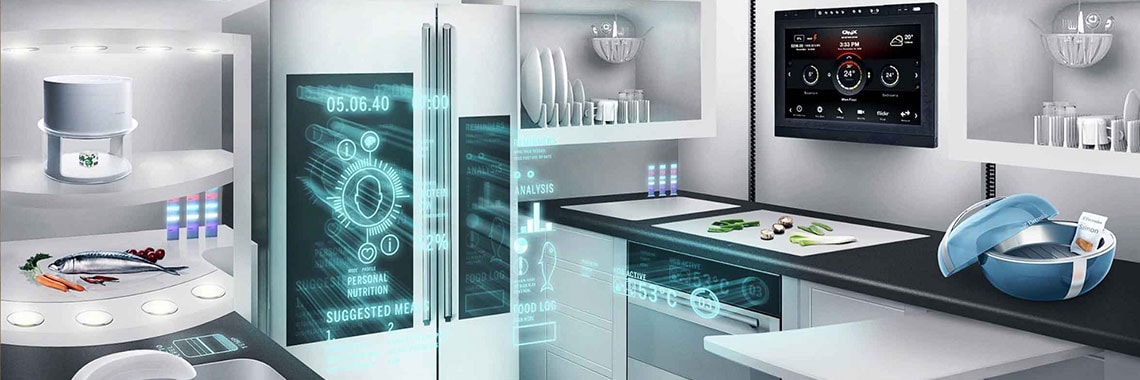
Only a few years ago, we saw the first evidence of what so-called “smart” appliances could accomplish, with high-definition displays on refrigerator doors showing shopping lists, menus, recipes and anything else you can get from a Google search. But this was just a glimpse of what is possible, thanks to edge processors and sensors that play an important role in smart appliances ranging from toasters to ovens and refrigerators.
The consumer revolution has been a long time coming, a half-century in fact, since what could be considered the world's first smart home was created by Westinghouse engineer Jim Sutherland. His creation was the electronic computing home operator (ECHO IV) built using surplus equipment used in the company's nuclear power plant control systems. Not only could it compute the family's finances, but it also stored recipes, produced shopping lists, tracked the temperature of their home, and turned appliances on and off.
The problem, of course, was that the system he created was immense. It consumed four wooden cabinets that were 4 ft. wide, 6 ft. high and 2 ft. deep, weighed 800 lb., and cost about $10,000 -- that's about $85,000 in today's dollars. It wasn't until the microcontroller appeared in 1971 that it became possible to perform these and many other functions at orders of magnitude less cost and power consumption in the size of a postage stamp.
These 8-bit devices have since evolved into tiny powerhouses of computing performance that can perform machine learning to learn about our preferences over time, include wireless transceivers that link all our other smart connected devices, offer end-to-end security, and support touch control, voice recognition and many other functions. All of these capabilities are tailor-made for enabling smart home appliances and the results are beginning to appear in some of the latest models.
But this is just the beginning. Soon, edge microcontrollers, microprocessors and sensors will allow washers to adjust precisely for types of fabric, refrigerators to detect when we're running out of milk (and schedule a delivery), whether food is about to spoil, predict when an appliance is about to fail, and let us know about the problem and even offer to schedule a service team to come and fix it.
We'll be notified about all this on our smartphones no matter where we are and make our own decisions about its conclusions. And the longer the appliances are in use, the smarter they will become as they learn how and when we operate them to better accommodate our needs while also increasing their efficiency and reducing power consumption.
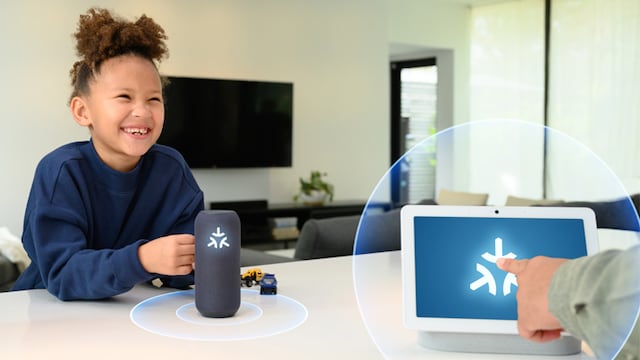
Many trends in advanced appliances require user interfaces with touch screens, system control with Wi-Fi and NFC, security, motor systems, power systems and sensor systems, and NXP is providing the building blocks for this new era. This can be further enhanced with NXP's solutions for security, safety libraries, artificial intelligence (even on smaller MCUs), voice control, connectivity and cloud-based on-boarding all the way up to very advanced Linux/Android based solutions. To help provide interoperability for our customers, NXP follows the latest standards like Wi-Fi 6, Matter and many others.
So, when you buy your next appliance, don't be surprised if once you turn it on it tells you how to set it up and refers you to your refrigerator so you can watch how to do it in a video and then offers to help you out with the chores.