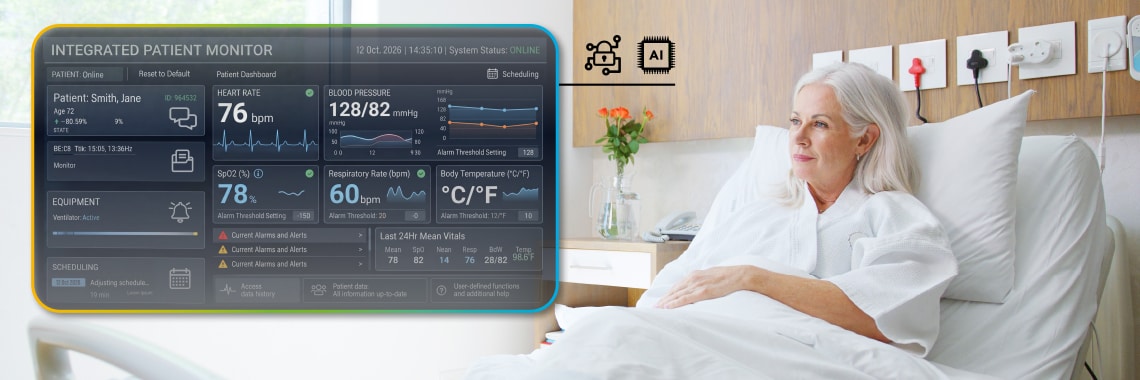
2030年までに、地球上の6人に1人が60歳以上になると予測されています。一方、平均寿命は世界中で延び続けると予想されています。これらの収束する傾向は、ヘルスケア施設に前例のない負担をかけ、現在の対応能力を超える可能性があると見られています。
幸いなことに、多くのテクノロジが明確な道を示しています。そうしたソリューションの1つが、エッジ・システムが患者の動きやバイタル・サインを追跡するAIベースのビジュアル患者モニタリングです。これにより、医療従事者は懸念に発展する前にリスクを特定することができます。
NXPでは、次世代の臨床ワークフロー・ソリューションを実現するために、i.MX 95アプリケーション・プロセッサとAra240ディスクリート・ニューラル・プロセッシング・ユニット (DNPU) をエンジニアに提供しました。これらのツールを活用することで、業界は差し迫ったヘルスケア需要に応え、より良い患者のアウトカムを実現し、最終的には命を救うことが可能になります。
今日の臨床の課題
ヘルスケア業界はすでに大きな苦境に陥っています。調査によると、2022年から、13万8,000人以上の看護師が米国の医療業界を離れました。残った看護師の共通の目標は、毎日のストレスを軽減し、維持できないほどの過重労働を改善して、すべての患者に行き届いたケアを提供できるようにすることです。
臨床チームを支える最も効果的な方法の1つは、アラーム疲れに対処することです。約85%の看護師が膨大な数の医療機器からのアラートに圧倒されていると報告しており、その多くは対応が不要なものです。システムがあまりにも多くの誤ったアラートを生成すると、アラートに慣れてしまい、一刻を争うような事態への対応が遅れる可能性があります。
結局のところ、この業界には、人力に頼ったモニタリング・プロセスに過度に依存しており、規模の拡大が難しいという問題があります。ヘルスケア企業は、差し迫った患者数の増加に対応するために、スタッフを増員するのではなく、既存のスタッフの効率を改善することを余儀なくされていますが、それが負担の増加につながっています。
従来のシステムでは、患者が困っていることを伝えるにはナース・コール・ボタンを押す必要があります。しかし、患者が自分で伝えることができない場合もあります。患者の容態の変化を病院スタッフに知らせる方法には、モニタリング機器(血圧計、点滴ポンプ、心拍モニターなど)によるアラームやスタッフの定期回診があります。しかし、多くの場合、アラームは聞こえなかったり、応答がなかったりします。ビデオによる患者モニタリングは、多くの場合はリアルタイムで、継続的に最新情報を提供します。そのため、現場の混乱や、容態の変化に対する対応の遅延が解消されます。
ビジョンベースの患者モニタリングについて
従来のモニタリングでは不快な配線やセンサを患者に取り付けることがありますが、ビジョンベースのシステムではセンサや壁またはベッドに取り付けたカメラで患者をモニタリングします。このようにして、ビジョンベースの患者モニタリングは、非侵襲的で継続的な患者の見守り手段を臨床医に提供します。また、ローカル処理によって、ビデオ・ストリームをビジョンAIアルゴリズムに渡して、患者の行動に基づいて予測分析を実行します。
具体的には、このようなシステムは、バイタル・サインを追跡し、異常な行動(転倒や目に見える患者の不快感など)を検出し、必要に応じてヘルスケア・スタッフに対応を迅速に促すことができます。特に、これらのシステムは自律的に動作するため、真に継続的で信頼性の高いモニタリングを実現し、患者に常に必要な注意とケアを確実に提供できるようになります。
臨床の自動化の機会
非接触型の患者モニタリングにより、臨床医はワークフローを自動化して、既存の問題の多くに対処できます。例えば、これらのシステムは従来のモニタリング・システムが生成する誤ったアラームの数を減らすことができます。ビジョンベースのシステムは、通常の患者の動きと真の緊急事態とを正確に区別することにより、患者が支援を必要としている場合にのみ看護師にアラートを送信します。これにより、チームは患者のケアに充てることができる時間が増え、アラート疲れが軽減されるため、組織はより効果的にスタッフを活用でき、増員しなくても、より多くの患者に対応できるようになります。
また、ビジョンベースのモニタリングは、より進んだコネクテッド・ケア環境を実現します。医師や専門家がすべての病棟に物理的に常駐できるわけではないため、ビジョンAIソリューションは、ノートパソコンや携帯電話などのデバイスに直接送信される通知を通じて、患者の状態を常に伝えます。これにより、医師はどこからでもリアルタイムのビデオ診察や行動分析を行うことができるため、医師が不在でも、患者は必要なときにいつでも専門家の支援を受けることができます
i.MX 95とAra240を活用した新しいワークフロー
医療グレードのモニタリング・システムには、エッジでビジョンAIを実行できるほどの高い性能を備えながら、最高水準の安全性と信頼性を維持するのに十分な堅牢性を備えたコンピューティング・ソリューションが必要です。
そのため、NXPは高性能コンピューティングと専用のイメージング機能を組み合わせたi.MX 95アプリケーション・プロセッサを設計しました。このプロセッサには、リアルタイム・アプリケーションおよびセーフティ・アプリケーション向けに、Arm® Cortex®‑M7-M5アプリケーション・クラスタ、Arm Cortex-M7ベースのリアルタイム・コア、Arm Cortex-M33セーフティ・ドメインが搭載されています。より高度なアプリケーション向けに、内臓のイメージ・シグナル・プロセッサ (ISP)、Arm Maliグラフィックス・プロセッシング・ユニット (GPU)、およびeIQ Neutronニューラル・プロセッシング・ユニット (NPU) が専用のコンピューティング・リソースの強力な基盤をシステムに提供します。
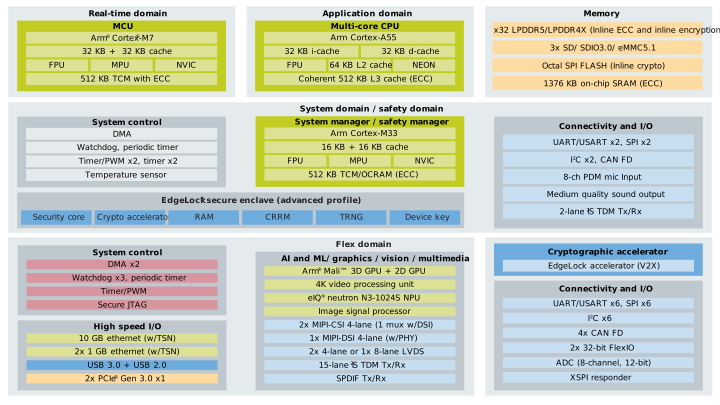 i.MX 95アプリケーション・プロセッサ ブロック図
をダウンロードすると、拡大図がご覧いただけます。
負荷の高いビジョン・プロセッシング・タスクのために、i.MX 95は、高帯域幅のPCIe (Peripheral Component Interconnect Express) Gen 4 x4またはUSBインターフェースを介して、NXPのAra240 DNPUと問題なく組み合わせることができます。高効率の3 TOPS/Wプロファイルを維持したまま、8ビット整数 (INT8) 演算では最大30 TOPS(1 TOPS:1秒あたり1兆回の演算)、BF16では最大15 TFLOPS(1 TFLOPS:1秒あたり1兆回の浮動小数点演算)の性能を提供します。ビジョン・ワークフロー向けの大規模なAIモデルをサポートするために、最大16 GBのLPDDR (Low-Power Double Data Rate) 4x/5メモリを搭載しています。これらのデバイスはビデオ・フィードをローカルで処理するため、エンジニアは安全かつセキュアで、緊急事態にリアルタイムで対応できる患者モニタリング・システムを構築できます。
よりスマートなワークフローで命を救う
ヘルスケア業界が高齢化社会に備える中、エッジAIシステムはケアの標準を再定義します。NXPの業界をリードするハードウェアが患者の見守りにインテリジェンスをもたらすことで、より正確かつ効率的で応答性の高いヘルスケア・システムを構築できます。
NXPは、医療OEMがよりスマートで、より人間中心のヘルスケア環境を構築するのを支援することに取り組んでいます。次の医療設計にインスピレーションを与えるi.MX 95アプリケーション・プロセッサとAra240 DNPUの詳細をご確認ください。