Columbus, Ohio, U.S. is known as the “test market of the U.S.,” where popular chains
from McDonalds to Starbucks try out new menu items with local consumers.
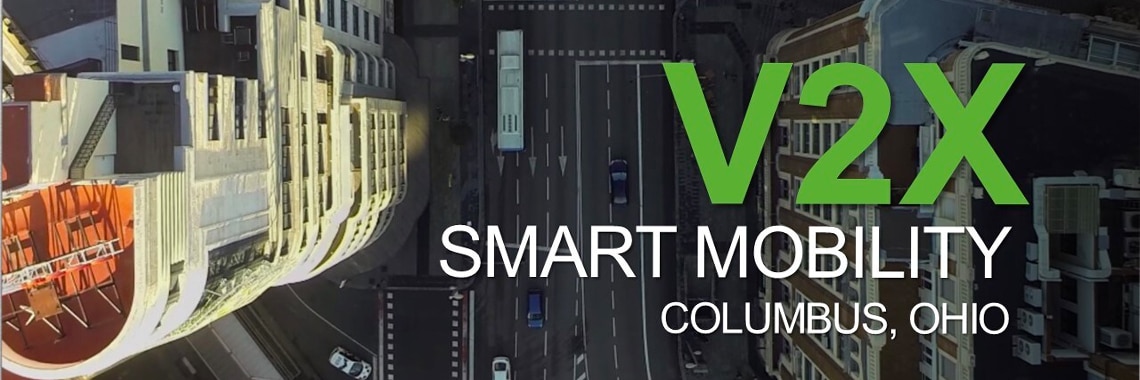
Fittingly, it’s now a test ground for smart multimodal mobility
concepts, serving as a model for other mid-size cities.
Like any city, Columbus grapples with slow-moving traffic that affects air
quality, commute time and safety. A top 10 fastest growing U.S. city,
its infrastructure feels the pains as more people make Columbus their home. It
also faces the consequences of transportation dominated by private cars,
adversely impacting neighborhoods where cash-based—and
carless—households are disproportionately high and access to bus routes
is limited.
Mobility as Columbus citizens know it is being reinvented – with
NXP. Two years ago, Columbus beat out 78 other cities who vied for the $50 million
federal Smart City Challenge grant to spur innovation for city mobility.
Columbus’ convincing proposition: Put the needs of its citizens first.
Called Smart Columbus, the multi-faceted, multi-phased program will bring
efficient and affordable mobility opportunities to every citizen.
“Smart Columbus has a vision of becoming a model connected city for the
future and NXP is helping us get there,” explains Jordan Davis,
director of Smart Cities, Columbus Partnership.
NXP has been one of Columbus’ earliest partners. “We’ve
gotten to know NXP more closely through a sister cities relationship that
we’re building with Eindhoven in the Netherlands,” Jordan
continues, “It is part of what makes us able to collaborate in these
really important times where innovation and the future a little bit
unknown.”
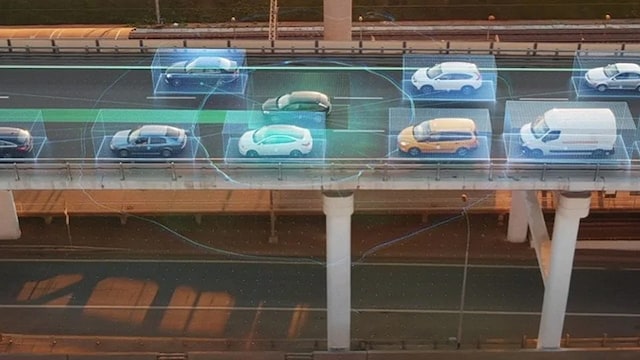
NXP is providing networking and sensor infrastructure for its roadways.
The technology will help address congestion, improve safety and bring about an
improved traffic management environment that will help the city make better
decisions about for future planning of the city.
“We will never have people in our community waiting at pointless red
lights or emergency responders hesitating through a busy intersection. We can
start to create traffic management that works for people in real-time
scenarios. That will improve how we get around, reduce stress, improve quality
of life and hopefully keep all of us more safe,” Jordan explained.
Smart mobility comes to life in new experience center Open to the public, the new Smart Columbus Experience Center showcases
engaging technology demos about the future of mobility, projects and pilot
tests coming to Columbus.
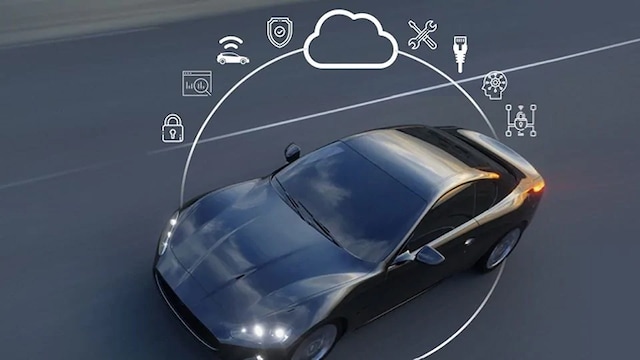
Vehicle-to-everything (V2X) communications is a vital technology to achieve
the connectivity goals for Smart Columbus – and NXP provides a mature,
second generation, road-ready solution.
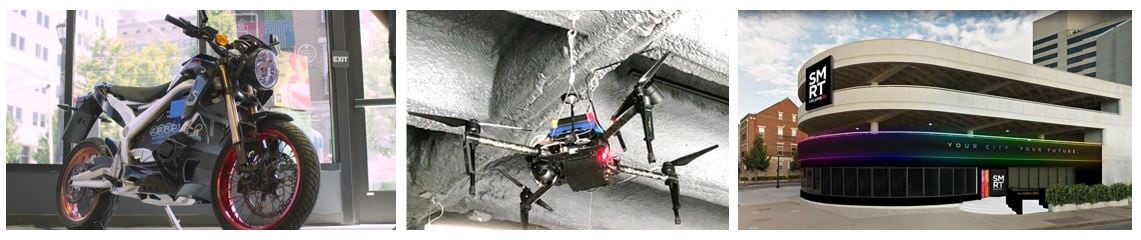
Our demo can be seen inside the experience center. Using V2X, a drone can
communicate with the motorcycle, pinpointing what’s ahead, down a hill
and even around the corner.
Above: This electric motorcycle has a bird’s eye view of
what’s on the road ahead. The drone, fitted with a camera, streams real-time video to the monitor via
a V2X DSRC channel.
The Columbus Experience Center showcases the future of smart mobility, with
connected, autonomous, shared and electric vehicles. And with NXP, it shows
how Smart Columbus is on the fast track to innovate mobility in ways never
imagined before.
NXP is an official US Department of Transportation’s Smart City
Challenge provider of vehicle-to-vehicle and vehicle-to-infrastructure (V2X)
technology. Together with partner Cohda Wireless, the wireless technology
allows cars to securely exchange data, such as hazard warnings, over
distances of more than a mile to prevent accidents and improve traffic flow.
Using V2X technology, Columbus can connect vehicle corridors and
intersections so that transit buses, first responder vehicles, city and
partner fleet vehicles and private vehicles. Emergency vehicles can
communicate to the central transportation authority for prioritizing traffic
signals for safety and efficiency.
Monica Davis leads Automotive Marketing Communications at NXP Semiconductors. With a focus on software-defined vehicles and next-generation automotive platforms, she connects technology trends to the challenges and opportunities facing the mobility industry.